Description
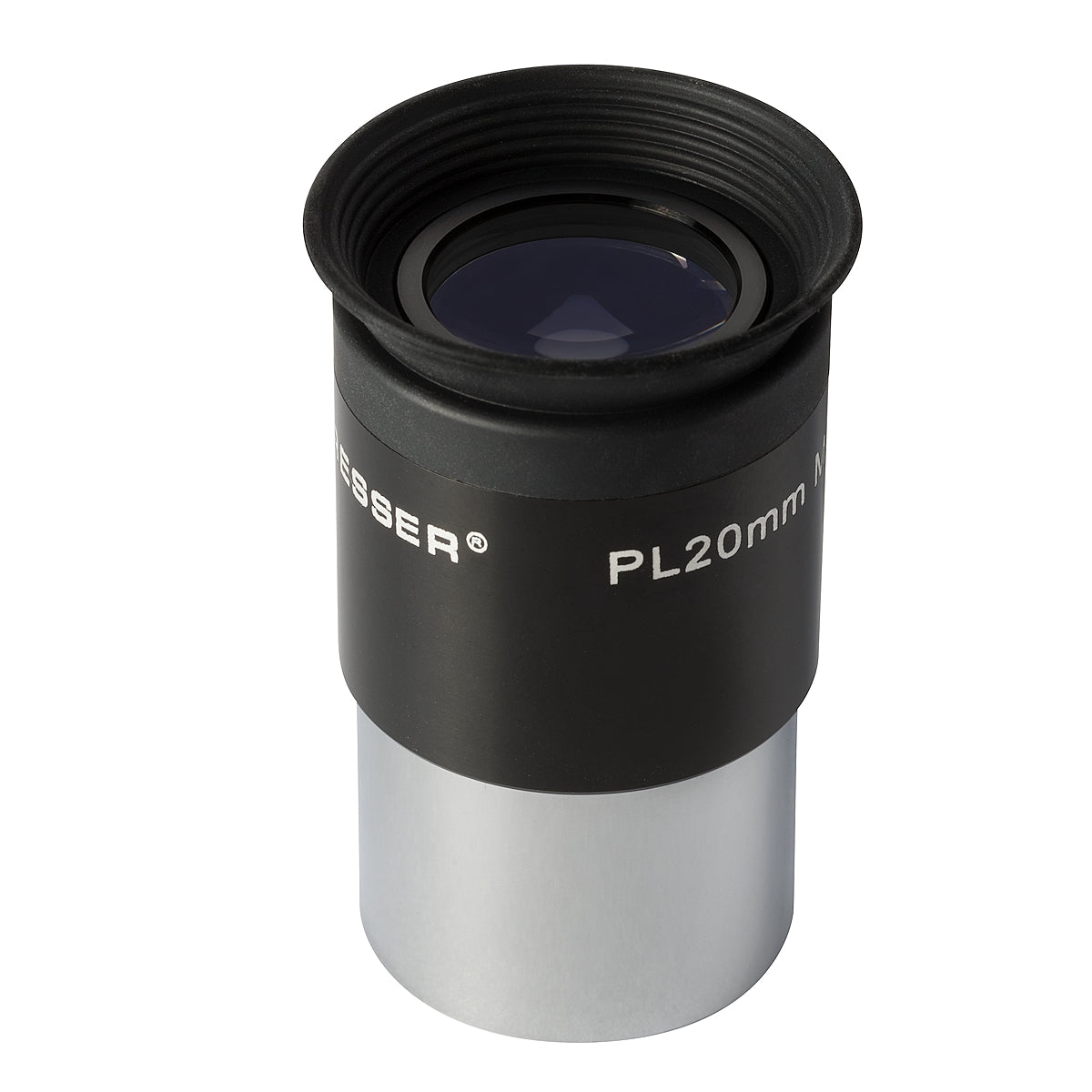
The BRESSER Plössl 20 mm eyepiece is a classic 4-lens eyepiece with a standard 1.25" (31.7 mm) mounting diameter, designed for survey observations and expanding the magnification range of any astronomical telescope. Thanks to the Plössl scheme, it provides a sharp, high-contrast image, noticeably better than simple Kellner and Huygens eyepieces from budget kits. The 20 mm focal length provides low to medium magnification - ideal for searching for objects, viewing the entire Moon, open clusters and initial aiming before moving on to high magnifications. All lens surfaces have full multi-layered illumination, which removes parasitic glare and increases the brightness of the image. The all-metal housing without plastic ensures durability and stability of the optics. The foldable rubber eyecup cuts off side light and adds comfort, and the blackened inner tube increases contrast. The larger eyepiece compared to short-focus makes observing with glasses more enjoyable and less tiring. The filter thread allows you to screw color and fog filters directly into the eyepiece.
Magnification on typical telescopes (telescope focal length ÷ 20 mm)
On a 700 mm telescope — 35x (Venus 76/700, First Light, Junior series)
On a 900 mm telescope — 45x (Sirius 70/900, Taurus 90/900)
On a 1000 mm telescope — 50x (Messier NT-203/1000, AR-102/1000)
On a 1200 mm telescope — 60x (Messier NT-150L/1200, AR-127L/1200)
On a 1525 mm telescope — 76x (Messier 12" Dobson)
With a 2x Barlow lens, the magnification doubles (the eyepiece works like a 10mm), with a 3x it triples (like a 6.7mm), which gives you additional working steps without having to buy shorter eyepieces.
Design features
- 20 mm focal length - defines low to medium magnification on most telescopes. This is a classic "viewing" range for finding objects and covering large clusters in one field. The eyepiece is convenient as a starting point for aiming before moving on to more detailed magnification. The user gets a comfortable wide view of the sky.
- The Ploszl scheme (4 lenses in 2 groups) is a classic symmetrical four-lens design that produces a sharp image with good correction of field aberrations. It provides noticeably higher quality than simple Kellner or Huygens glasses from budget sets. The image remains sharp almost to the edge of the field of view. The user immediately sees the difference in detail and contrast.
- Fully multi-coated — all air surfaces of all lenses are multi-coated. They minimize light reflection and ghosting inside the eyepiece. This allows more light to pass through the eyepiece, increasing contrast and brightness. The user gets a clearer image without haze around bright objects.
- The visible field of view of 50° is the angular size of the image that the eye sees through the eyepiece. For the Ploszl scheme, this is a classic comfortable field, giving the feeling of a “window” into the sky. At a focus of 20 mm, it provides a wide real view for clusters and the entire Moon. The user gets a balanced field without distortion at the edges.
- Larger and more comfortable eyepiece - due to the longer focal length, the eyepiece of the 20 mm eyepiece is larger than that of short-focus models. This makes the pupil dilation more comfortable, and the observation itself less tiring. The eye can more easily "catch" the full field without having to search for the right position. The user can observe for a long time without straining.
- All-metal body — both the body and the inner tube are made entirely of metal, without plastic. This increases the strength, durability and stability of the lens position. Metal also holds its shape better during temperature changes during night observations. The user ...