Description
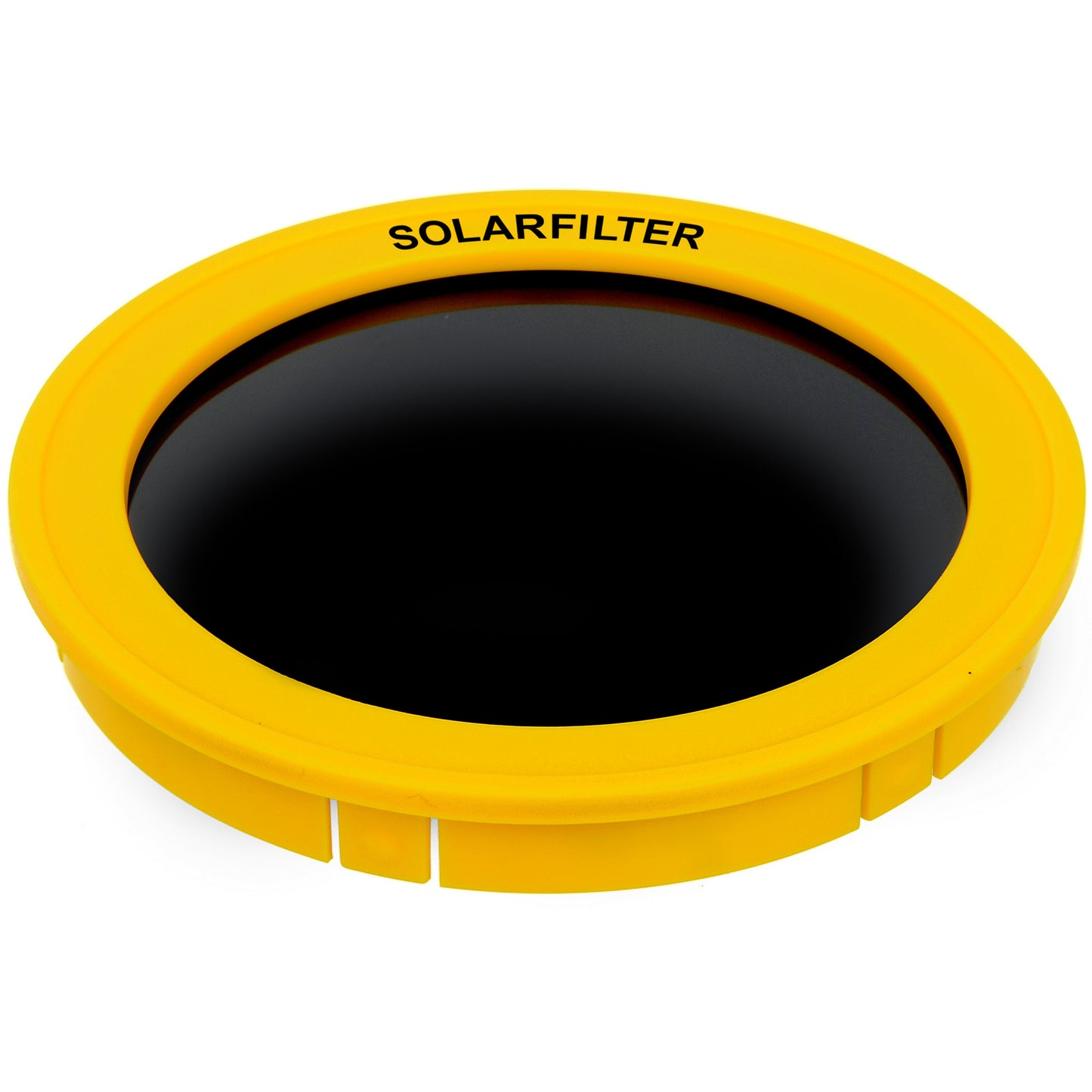
The Bresser Refractor 90/500 EQ3 telescope is a compact achromatic refractor telescope with a lens diameter of 90 mm and a focal length of 500 mm, designed for comprehensive observations of the night sky both in urban conditions and during nature trips. Thanks to its wide aperture, the instrument collects 200 times more light than the naked human eye, which opens up bright and detailed pictures of the starry sky to the observer. The telescope is ideal for beginners and amateur astronomers who want a reliable and versatile tool for their first acquaintance with space. The short focal length of f/5.5 makes this refractor an excellent choice for observing large open star clusters, panoramas of the Milky Way and extended nebulae. Thanks to the stable equatorial mount of the EQ-3, the observer can precisely track celestial objects with manual micrometer screws without losing sight of them. The kit includes an aperture solar filter, which allows you to safely observe sunspots, partial and total solar eclipses and planetary transits. The maximum recommended magnification of 180x allows you to see the rings of Saturn, the Great Red Spot of Jupiter, the phases of Venus and details of the relief of the Moon. Three key advantages of the model are the high aperture of 90 mm, the convenient equatorial mount of the EQ-3 for precise guidance, as well as the built-in solar filter, which turns the telescope into a tool for day and night observations.
What space objects can be observed with this telescope:
Sun: Sunspots - dark areas on the surface of the Sun, which are zones of intense magnetic activity; their nuclei (umbra) and surrounding penumbra are clearly visible in a telescope with a solar filter; Solar flares - bright areas of the photosphere near sunspots, which indicate increased magnetic activity; Solar eclipses - partial and total eclipses, during which you can safely observe the movement of the lunar disk across the solar disk using a complete aperture filter; Planetary transits - the passage of Mercury or Venus across the disk of the Sun in the form of black dots that slowly cross the solar disk; Granular structure of the photosphere - under conditions of good atmospheric screening, you can notice a faintly pronounced granular structure of the solar surface.
Moon: Craters - large impact structures, in particular Tycho, Copernicus, Clavius, Plato; in a 90 mm telescope, details of craters, shafts and central mountains are clearly visible along the terminator line; Seas (Maria) - large dark plains of volcanic origin: Sea of Tranquility, Sea of Rain, Sea of Clarity, Ocean of Storms; Mountain ranges - Apennines, Caucasus, Carpathians on the lunar surface; their shadows and relief are clearly visible; Valleys and furrows - Valley of the Alps, Hyginus furrow; winding structures stretching for hundreds of kilometers; Crater rays - light scattering of emissions from meteorite impacts, especially clearly expressed around the Tycho crater at full Moon.
Planets: Saturn - the rings of the Saturn system are visible already at a magnification of 50–70x, the Cassini division between the A and B rings is noticeable under favorable conditions; the largest satellite Titan can be seen; Jupiter - the two main equatorial cloud bands, the Great Red Spot (under high magnification), as well as the four Galilean satellites: Io, Europa, Ganymede, Callisto are clearly visible; Mars - during oppositions, the planet's reddish disk, polar ice caps, and darker albedo-d...